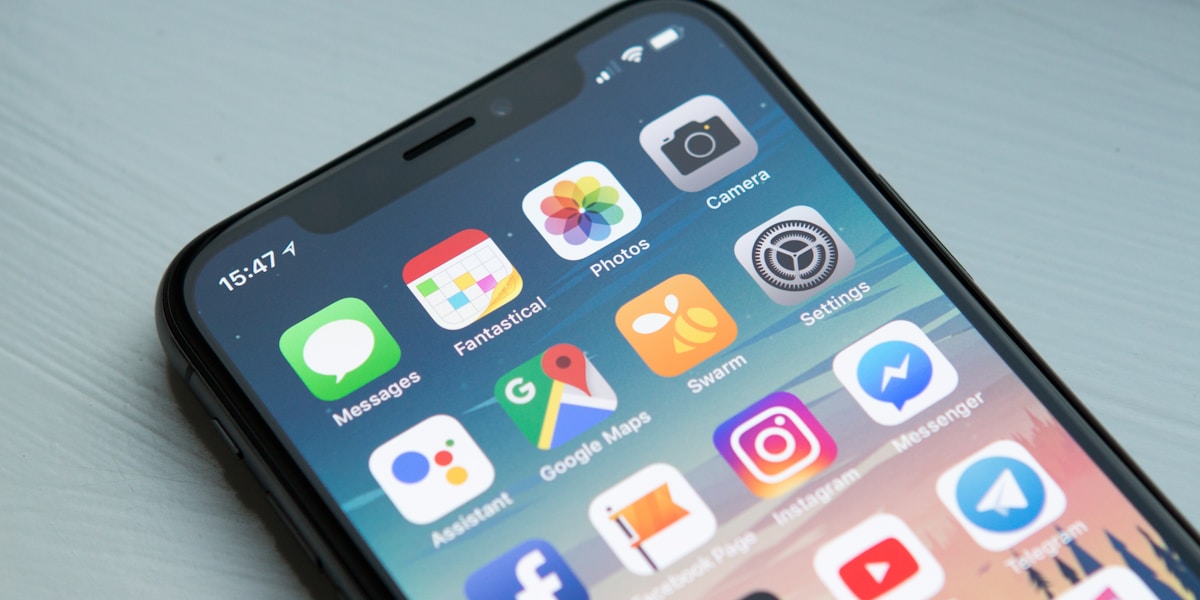
You've decided your business needs a digital product. Now comes the question that trips up founders, operations managers, and CTOs alike: should you build a native mobile app or a web application? The answer used to be simple — if your users are on phones, build an app. But in 2026, the lines have blurred so thoroughly that the old rules don't apply anymore. Progressive web apps behave like native apps. Native apps increasingly rely on web views. And the cost difference between the two paths can swing a project budget by six figures.
Here's a practical framework for making the right call — based on what your business actually needs, not what's trendy.
The Landscape Has Changed
Five years ago, the mobile app vs web app debate was straightforward. Native apps were faster, had better device access, and lived on the home screen. Web apps were cheaper, easier to update, and worked everywhere. You picked based on budget and performance needs.
In 2026, those distinctions have narrowed dramatically. Progressive Web Apps (PWAs) now support push notifications on iOS and Android, work offline, access device cameras and sensors, and can be installed to the home screen — all capabilities that used to require a native app. Meanwhile, frameworks like React Native, Flutter, and Kotlin Multiplatform let developers build native apps from a single codebase, cutting the cost premium that once made mobile development prohibitively expensive for smaller businesses.
The result: the decision is no longer about technical capability. It's about user behavior, distribution strategy, and long-term maintenance cost.
When a Web App Is the Right Choice
Your users find you through search. If your customer acquisition funnel starts with Google — and for most B2B businesses, it does — a web application has a massive advantage. Web apps are indexable by search engines. Every page, every feature, every piece of content can rank and drive organic traffic. A native app lives behind an app store wall, invisible to search crawlers. If discoverability matters more than device-level performance, the web wins.
You need rapid iteration. Web applications deploy instantly. Push a code change, and every user sees it immediately — no app store review, no waiting for users to update. For businesses in early stages where the product is evolving weekly based on customer feedback, the web's deployment speed is a genuine competitive advantage. App store review cycles (1-3 days on average, longer if flagged) create friction that slows down learning loops.
Your audience spans devices. If your users need access from laptops at the office, tablets in the field, and phones on the go, a responsive web application handles all three from a single codebase. Building native apps means maintaining separate iOS and Android codebases (or using a cross-platform framework, which adds its own complexity). A web app is inherently cross-platform by default.
Budget is a constraint. A well-built web application typically costs 40-60% less than equivalent native app development, primarily because you're building for one platform instead of two. Ongoing maintenance follows the same ratio. For businesses with limited budgets who need maximum functionality per dollar, the web is usually the more efficient path.
When a Native Mobile App Makes Sense
Your core experience depends on device hardware. If your product requires deep integration with the camera (beyond basic photo capture), GPS with background tracking, Bluetooth for IoT devices, health sensors, or AR capabilities that push device limits, native development still offers meaningfully better performance and reliability. A field service app that needs to track technician locations in real-time, scan barcodes rapidly, and work in areas with spotty connectivity benefits from native capabilities that PWAs can approximate but not match.
Your users expect an app store presence. Consumer-facing products in certain categories — fitness, finance, social, gaming — carry an implicit expectation that they'll be found in the App Store or Google Play. Your target users are searching those stores, reading reviews, and comparing options. If your competitors are in the app store and you're not, you're invisible to a segment of your market that discovers products that way.
Engagement is your primary metric. Native apps have higher engagement rates than web apps, period. Push notifications on native are more reliable and customizable. Home screen presence drives habitual usage. For products where daily active usage determines success — habit-forming tools, communication platforms, health tracking — native apps have a measurable edge in retention and session frequency.
Offline functionality is critical. While PWAs support offline caching, native apps handle complex offline scenarios — large datasets, real-time sync, conflict resolution — more robustly. If your users regularly work in environments without reliable internet (construction sites, rural areas, underground facilities), native development gives you more control over the offline experience.
The Third Path: Progressive Web Apps
For a growing number of businesses in 2026, the answer is neither traditional web app nor native app — it's a PWA. Progressive Web Apps combine the reach and cost efficiency of web development with many capabilities that previously required native apps.
A PWA can be installed to the home screen, work offline, send push notifications, and access device cameras and sensors. It's built with standard web technologies (HTML, CSS, JavaScript), deploys like a website, and can optionally be listed in app stores through TWA (Trusted Web Activities) wrappers on Android and Safari web app support on iOS.
Major companies have proven the model works at scale. Starbucks saw a 2x increase in daily active users after launching their PWA. Pinterest's PWA increased engagement by 60% compared to their previous mobile web experience. For businesses that need mobile presence without the overhead of native development, PWAs represent the sweet spot.
The honest limitation: iOS still treats PWAs as second-class citizens compared to native apps. Push notification support arrived late and remains less capable. Storage limits are tighter. Background processing is restricted. If your user base skews heavily toward iPhone, these limitations matter.
A Decision Framework
Rather than choosing based on technology preference, run through these five questions:
1. Where do your users discover you? Search engines → web. App stores → native. Both → consider PWA with app store listing.
2. How often will your product change? Weekly iterations → web or PWA. Stable, mature product → native is fine.
3. What device capabilities do you need? Basic (camera, GPS, notifications) → PWA can handle it. Advanced (Bluetooth, AR, background processing, health sensors) → native.
4. What's your maintenance budget? Limited → one platform (web or PWA). Comfortable → native if the benefits justify it. Remember: native means maintaining two codebases or adopting cross-platform tooling.
5. What does your competitive landscape look like? If every competitor has an app store presence, going web-only might cost you credibility. If no one in your space has a great web experience, that's an opportunity.
The Hybrid Reality
In practice, most successful businesses in 2026 aren't choosing one or the other — they're sequencing. The typical path looks like this: launch a web application first to validate the product and acquire early users through search and direct traffic. Once the product is stable and user behavior patterns are clear, build a native app for the features and audience segments that benefit most from it. Keep the web app running as the primary acquisition and onboarding channel.
This sequencing approach minimizes upfront risk. You're not spending $100K+ on native development before you know whether users want the product. And when you do build native, you're informed by real usage data about which features matter most on mobile.
What This Means for Your Budget
Rough cost ranges for 2026 (a functional MVP with core features, not a fully polished product):
Web Application: $15,000 - $50,000. Fastest to market. Easiest to iterate. Single codebase.
Progressive Web App: $20,000 - $60,000. Slightly more than a standard web app due to offline, installation, and notification features. Still a single codebase.
Native App (Cross-Platform): $40,000 - $120,000. React Native or Flutter. One codebase, two platforms. Good balance of performance and cost.
Native App (Fully Native): $80,000 - $200,000+. Separate iOS (Swift) and Android (Kotlin) codebases. Maximum performance and platform integration. Maximum cost.
Ongoing maintenance typically runs 15-25% of initial build cost per year, regardless of platform. Factor that into your total cost of ownership calculation.
Making the Call
The right platform choice isn't about which technology is "better" — it's about which path gets your product in front of users fastest while setting you up for sustainable growth. For most small and mid-size businesses, that means starting with the web and expanding to native when the data tells you to. For businesses in hardware-dependent or consumer engagement-driven categories, native might be the right starting point from day one.
Either way, the worst decision is no decision. Building something — even on the "wrong" platform — teaches you more about your users than six months of deliberation ever will.
Need Help Deciding?
At MadXR, we build both web applications and mobile apps. We've helped businesses navigate this exact decision dozens of times, and we'll give you an honest recommendation based on your specific situation — even if that recommendation is "you don't need us yet." Let's have a conversation about what makes sense for your business.